Here is my final cut for my music video. Below I have stated how I have changed the video since the last rough cut.
...
...
What I have changed since the last rough cut:
1. Colour corrected all the footage of the girl alone after the breakup with a light blue tint to create a cold feel to the video.
2. Added a CU of a burning photograph of the couple as the ending closing shot. Then I layered that shot with an ELS of the girl walking in the distance at utopolis in Kirchberg (3:44).
3. Added a CU of a burning photograph of the couple at the start of the video to put the narrative a bit more into some context. Then I layered that shot with an ELS of a street with a zebra crossing in Kirchberg with cars passing by.
4. Added more colour correction on the lip syncing shots e.g. made the redscreen background shots pink instead of red.
5. I have changed one really grainy CU shot of the girl character's face to a better non-grainy CU shot of the girl character's face (2:56).
6. I have added some layering to the shots where the lyrics go "He's floating in my bloodstream now", for example by adding a CU shot of the girl character swimming underwater over a shot of the girl character dancing in the club and over a MLS of the ex boyfriend walking alone at night (2:08).
7. Added a MCU shot of the artist lip syncing near the very end of the track over a quick fast editing pace section (3:15 - 3:16).
8. Took away the colour correction on one set of the intimate footage where the lyrics are "Holding me close, breathe on my skin, lips down my body", I thought the colour correction there looked quite false and edited on. I wanted to create the look that it was colourful lighting creating that effect.
9. Changed the shot at 2:04 - 2:07 by adding a LS of the city at night and duplicating the shot of the blurry lights which are all layered over a MS of the artist lip syncing with pink long curly hair.
Showing posts with label music video. Show all posts
Showing posts with label music video. Show all posts
Tuesday, 3 April 2018

Monday, 2 April 2018
MVID: Final Rough Cut
Here is my final rough cut. I have stated how I have reflected on audience feedback and also just the general things I have added or changed to the video since the last rough cut.
Link to Audience Feedback:
After getting audience feedback for rough cut 4, I found that:
1. It was really helpful to know who my mum and my sister thought was the target audience for my video (females + males aged 15-18) because this is quite correct.
2. My mum and my sister didn't exactly think there was a problem with this but even so, I thought I should break up the long drawn out breakup scene with some other shots of the couple breaking up.
3. They said they thought the layering was very striking and impressive so I decided to keep all the layering that I have in the video so far because clearly it got a great response from the audience and it's very striking and impressive to the audience - I will therefore add some more layering into my video.
Link to Audience Feedback:
After getting audience feedback for rough cut 4, I found that:
1. It was really helpful to know who my mum and my sister thought was the target audience for my video (females + males aged 15-18) because this is quite correct.
2. My mum and my sister didn't exactly think there was a problem with this but even so, I thought I should break up the long drawn out breakup scene with some other shots of the couple breaking up.
3. They said they thought the layering was very striking and impressive so I decided to keep all the layering that I have in the video so far because clearly it got a great response from the audience and it's very striking and impressive to the audience - I will therefore add some more layering into my video.
4. I am not going to mess with the editing pace much more I don't think due to the feedback I got, I decided to make the section between 0:55-1:10 cut faster to the beat while the beats are building up to the drop which is on the line "touching me gently".
5. I found it useful to know that the narrative I am trying to portray is coming across to the audience and that it is clear everything is from the female character's point of view. This is exactly what I wanted the audience to think.
...
...
What I have changed since the last rough cut:
1. Added some re-filmed footage of the break-up scene (inside in Utopolis Kirchberg) to go with the existing old footage of the couple break up (infront of Philarmonie - outside).
2. Added some new footage of the couple doing intimate things together (couple flashback) in red lighting (colour gels created that effect).
3. Re-edited the section between 0:55-1:10, so that there is fast pace editing for longer (from immediately when the beat starts to build up before the drop).
...
...
What I have changed since the last rough cut:
1. Added some re-filmed footage of the break-up scene (inside in Utopolis Kirchberg) to go with the existing old footage of the couple break up (infront of Philarmonie - outside).
2. Added some new footage of the couple doing intimate things together (couple flashback) in red lighting (colour gels created that effect).
3. Re-edited the section between 0:55-1:10, so that there is fast pace editing for longer (from immediately when the beat starts to build up before the drop).
Sunday, 3 December 2017
SHOOT PLANNING: Equipment List
1. GoPro 5 Hero Black

2. GoPo 4

3. Sony A58 Camera

4. Amazon Tripod - Pistol Grip

5. GoPro 5 Hero Session


13. Manfrotto Phone Stand

14. SD Cards

15. Canon

2. GoPo 4


4. Amazon Tripod - Pistol Grip

5. GoPro 5 Hero Session

6. Osmo Dji


7. Arespark Selfie Stick


8. GorillaPod - for GoPro and Sony A58


9. iPhone 6S

10. Halogen Lights

11. 2 LED Lights
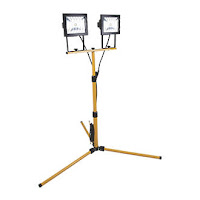
12. Greenscreen

10. Halogen Lights

11. 2 LED Lights

12. Greenscreen
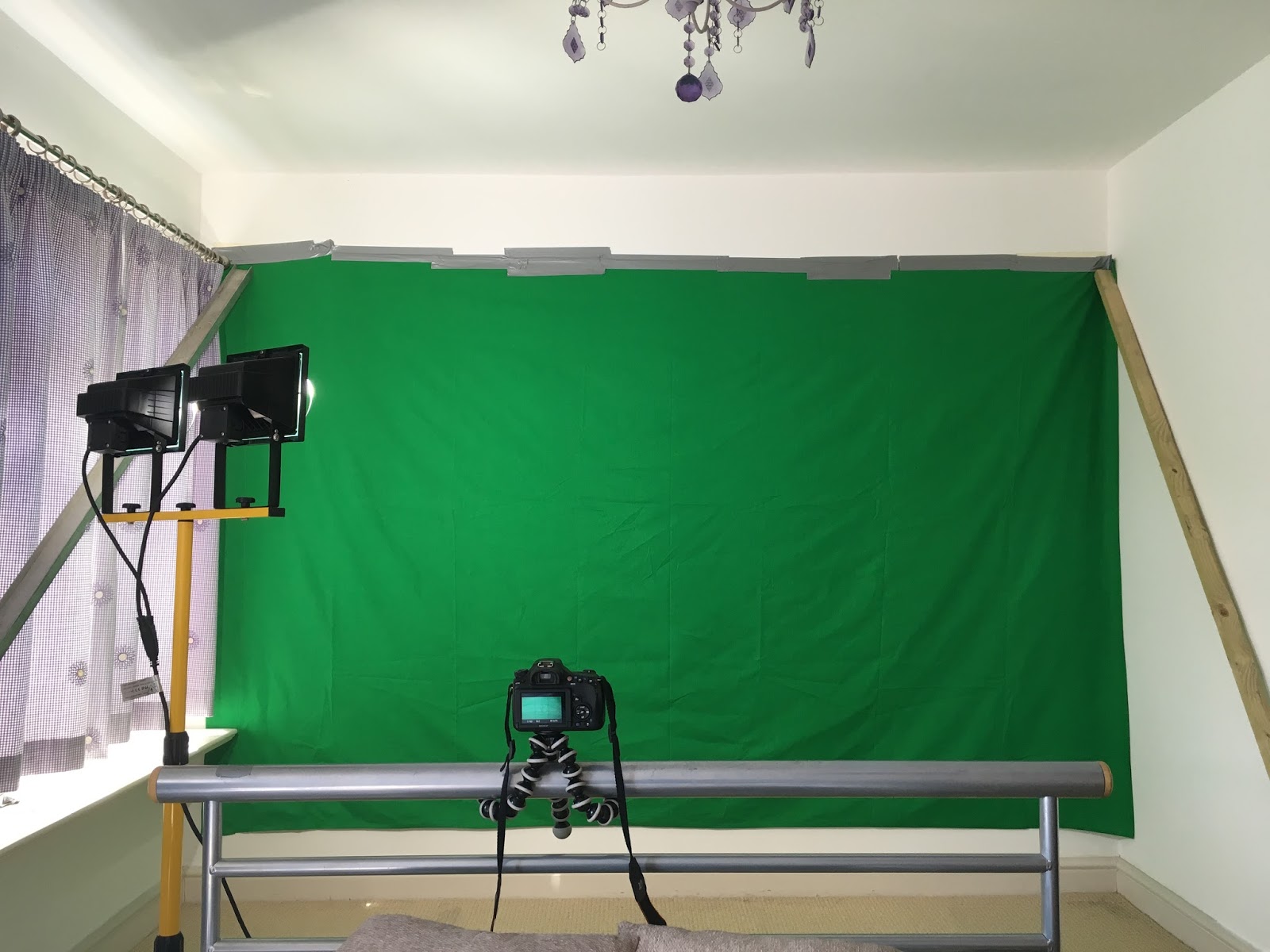
13. Manfrotto Phone Stand

14. SD Cards

15. Canon
SHOOT PLANNING: Permissions
To use footage of cast:
...
...
PENDING
...
To film in a nightclub:
1. Melusina
...
 On Friday the 1st of December, I sent a message to the nightclub, Melusina, in Clausen, Luxembourg, about whether I could film in the nightclub on Friday the 8th of December. They replied as said I can't film on that date but instead they said I could on that night (1st of December). Obviously this was too soon for me to collect all the cast and people to operate the camera and to book the trip there.
 After this message I decided to ask whether they would let me film on the Saturday night (the 9th of December) instead of the friday night or the next friday (the 15th of December). They have still not replied back yet.
2. M Club
...
 Since Melusina did not reply back yet, I decided to ask another nightclub in Luxembourg, called M Club, whether I could film on the 8th or the 15th of December. They have still not answered back and it's already Sunday night so I don't know what's going on there, I will just wait and see or if not I will email them instead.
I plan to ask a few other clubs too just in case so Byblos Club, Luxembourg and White Club Luxembourg.
...
 I have found out that I can film in M Club now after many days of waiting for responses back. They asked me what kind of music video it was and who's the artist. I explained the whole story of what I am doing for A2 Media Studies and how I wanted to film a club scene of some sort for my music video.
...

...
To film in a swimming pool:
1. Les Thermes Strassen, Luxembourg
The script on the phone:
Hello there,
Do you speak english?
My name is Evie Gibbons and I am a student from St Georges International School of Luxembourg. My school is under the british system of A Levels and for the A Level subject of Media Studies there is coursework involved which includes me making a music video for an already existing artist, Astrid S.
For this music video I have to film some underwater footage of just myself and one other person with clothes on in a swimming pool (with no one else in the footage). So, I was wondering whether it would be possible for me to come and film in the swimming pool at les thermes? I understand the issues this may cause and am willing to work around things for your convenience.
I am willing to come during a time when there are very few people at the swimming pool. Could you recommend when it is best to do this?
Also, I will be coming with just two small cameras and a small tripod so it will be very discreet and non-obtrusive.
Also, I will show you the footage I have filmed afterwards to make sure you are okay with it. The footage will only be seen within a school context.
Hello there,
Do you speak english
I rang here earlier to ask about filming, the woman i spoke to said I should ring here at 5:00 to ask about filming in the swimming pool at les thermes.
ASK FOR NOTHUM - Friday the 19th of January at 9:30 for 15 minutes.
...
To film in a nightclub:
1. Melusina
...


2. M Club
...

I plan to ask a few other clubs too just in case so Byblos Club, Luxembourg and White Club Luxembourg.
...

...

...
To film in a swimming pool:
1. Les Thermes Strassen, Luxembourg
The script on the phone:
Hello there,
Do you speak english?
My name is Evie Gibbons and I am a student from St Georges International School of Luxembourg. My school is under the british system of A Levels and for the A Level subject of Media Studies there is coursework involved which includes me making a music video for an already existing artist, Astrid S.
For this music video I have to film some underwater footage of just myself and one other person with clothes on in a swimming pool (with no one else in the footage). So, I was wondering whether it would be possible for me to come and film in the swimming pool at les thermes? I understand the issues this may cause and am willing to work around things for your convenience.
I am willing to come during a time when there are very few people at the swimming pool. Could you recommend when it is best to do this?
Also, I will be coming with just two small cameras and a small tripod so it will be very discreet and non-obtrusive.
Also, I will show you the footage I have filmed afterwards to make sure you are okay with it. The footage will only be seen within a school context.
Hello there,
Do you speak english
I rang here earlier to ask about filming, the woman i spoke to said I should ring here at 5:00 to ask about filming in the swimming pool at les thermes.
ASK FOR NOTHUM - Friday the 19th of January at 9:30 for 15 minutes.
Saturday, 7 October 2017
MVid EG3: Tove Lo - Disco Tits
POSSIBLE POINTS OF INFLUENCE FOR MY MUSIC VIDEO:1. The use of colour correction - purple, pink colour correction (vibrant colours)
2. The use of slow motion
3. The on and off use of cutting to the beat
4. The deconstructionist element (e.g. in costume)
Act: Tove Lo
Track: Disco Tits
Year: 2017
Director: Tim Erem
Genre: electropop
Main Audience: Females (16-24)
There are 11 shots in the first 30 seconds. This estimates that each shot lasts 2.7 seconds.
...
...
2. The use of slow motion
3. The on and off use of cutting to the beat
4. The deconstructionist element (e.g. in costume)
Act: Tove Lo
Track: Disco Tits
Year: 2017
Director: Tim Erem
Genre: electropop
Main Audience: Females (16-24)
There are 11 shots in the first 30 seconds. This estimates that each shot lasts 2.7 seconds.
...
...
There is frequent use of low key lighting in this music video. At some points, colour correction/colour gels are used. This is a stereotypical convention of the electropop genre.
Dennis McQuail's 'Uses and Gratifications' can be applied within this music video. Three of the gratifications are present: personal identity, personal relationship and diversion/escapism. Females aged 16-24 can identify with the female singer, Tove Lo since she is the main protagonist in her video. This overlaps with John Berger's 'ways of seeing', which suggests that men act and women appear within the media - this implies that men have an active role in the media while women only have a passive role. This music video counteracts/goes against this theory by having a female as the main protagonist. Tove Lo has an active role in the music video by being the main female protagonist who leads the narrative.
Andrew Goodwin argued that there are 6 key features/conventions of music videos, this theory does apply to this music video. These 6 conventions are: genre characteristics, frequent close ups of the artist, the notion of looking, intertextual references, relationship between lyrics and visuals and finally the relationship between the music and the visuals. There are frequent close ups of the artist lip syncing in this music video. Also, there are many electropop genre characteristics shown throughout such as colour correction, striking costumes. There is also a clear relationship between the lyrics and the visuals for example when Tove Lo sings "Nipples are hard, ready to go" you see shots of Tove Lo dancing caressing her chest.
 |
| Close Up of artist, Tove Lo lip syncing in the video |
I have also seen other videos which have frequent use of colour correction such as Halsey's 'Ghost', Astrid S's 'Such A Boy', VENIOR's 'Sugar Rush' and Hayley Kiyoko's 'Cliff's Edge'. All these videos are in the electropop genre.
There is a lot of crude language and sexual imagery in this video; quite cleverly, a muppet character was used as the male partner to be able to get away with the sexual imagery and language. If a male human was used instead, there would have been obvious censorship issues. It has been signified through costume and body language, that Tove Lo is quite brallous.
Laura Mulvey's 'male gaze' is exploited in this music video, through the costume that Tove Lo is wearing (a white short ribbed crop top), she isn't wearing a bra so you can see her nipples through the top. Also, you can denote that Tove Lo and the male character in the music video are performing sexual activities such as foreplay. There is one scene within the music video where Tove Lo is wearing just underwear - a pink bra with a red heart on each nipple. This piece of costume is deconstructionist and polysemic because the red colour of the hearts has sexual connotations and the heart shapes have playful innocent romantic connotations. You can also denote Tove Lo making a 'moaning face' several times throughout which further exploits this 'male gaze'. At the same time the 'male gaze' theory can be undermined in this video by the use of low-key lighting, the tattoos on her arms, punches the muppet in the video, has minimal make-up (for example, she is not wearing bright glossy lipstick), is wearing a nose hoop and her hair is messy - these things all de-glamourise, de-sexualise and masculinise her, providing a counter-normative feminine representation. Tove Lo is refusing to 'perform' gender (Judith Butler). Low key lighting is quite a countertypical thing to see in an electropop music video. Usually in electropop, the singer is made to look heavily glamourised (the skin is especially glamorised). The nose hoop she is wearing connotes rebellion and refusal to conform.
There is only one take (at the end) which lingers on the male character for longer than a second, it lingers on him for 5 seconds. It is a shot of Tove Lo driving with him into the distance. Also, the fact that she is the one driving the roofless car throughout the music video also signifies how she is pushing against the normative representation of females in relationships or even of females in a car with a man (that females don't do the driving if a man is there).
I also think the Bechdel test can be reflected on in this video. The Bechdel Test is a test to see whether a film has at least 2 female characters who have a name and talk about something other than a man. I think this music video passes the Bechdel test because Tove Lo leads the narrative on, she is actively deciding what is happening in the video, controlling what is going on (e.g. makes the muppet go down on her, makes the muppet dance with her). She also punches the muppet in the video and uses foul language which connotes that she is in control and that she is an assertive strong female who has taken on masculine attributes, which again pushes against the normative representation of females being weak, emotional and submissive. Although, there are some shots which specifically objectify Tove Lo which you could say goes against the idea that she is in control deciding things because the director probably would have decided on there to be objectifying shots within the video.
colour correction connoting states of drug use
making colouring explicitly related to drugs
club listening - colour correction - drug taking
illustrating, amplifying the lyrics - cuts show her chest at that point
classic example - is she a feminist or a post feminist - classic objectifying material
quite direct
the human in early 20's - ragged stubble - long hair
male character is wearing similar clothes to her - dancing is similar - hair similar - gender fluidity - refusal to perform gender
the equivalence in clothing mise-en-scene - reflecting
no lingering on the guy - short takes
she is looking in the mirror - body movement - framing - perfect for a GIF
framing - she is on right one time then she is on the left he is on the left then he is on the right - playing around with gender fluidity - elements of discontinuity - not really in face - because of the visual similarity
180 degree rule spitting in it's face
ghosting effect - 2 layers stacked up - opacity change - one is infront of the other
cuts to beat - don't cut to the beat continuously
ghosting - repetitive but useful effect - repeat effects
vernallis - flashing effect with cut jump cut - super zoom in - uh uh uh uh - very long take - good little section
bridging shot of the interior of the bar and the interior of the room - they don't show the interior of the room straight away they show a CU of her
(teen tween notion)
at the end only take which lingers on him - 5 seconds
There is a lot of crude language and sexual imagery in this video; quite cleverly, a muppet character was used as the male partner to be able to get away with the sexual imagery and language. If a male human was used instead, there would have been obvious censorship issues. It has been signified through costume and body language, that Tove Lo is quite brallous.
Laura Mulvey's 'male gaze' is exploited in this music video, through the costume that Tove Lo is wearing (a white short ribbed crop top), she isn't wearing a bra so you can see her nipples through the top. Also, you can denote that Tove Lo and the male character in the music video are performing sexual activities such as foreplay. There is one scene within the music video where Tove Lo is wearing just underwear - a pink bra with a red heart on each nipple. This piece of costume is deconstructionist and polysemic because the red colour of the hearts has sexual connotations and the heart shapes have playful innocent romantic connotations. You can also denote Tove Lo making a 'moaning face' several times throughout which further exploits this 'male gaze'. At the same time the 'male gaze' theory can be undermined in this video by the use of low-key lighting, the tattoos on her arms, punches the muppet in the video, has minimal make-up (for example, she is not wearing bright glossy lipstick), is wearing a nose hoop and her hair is messy - these things all de-glamourise, de-sexualise and masculinise her, providing a counter-normative feminine representation. Tove Lo is refusing to 'perform' gender (Judith Butler). Low key lighting is quite a countertypical thing to see in an electropop music video. Usually in electropop, the singer is made to look heavily glamourised (the skin is especially glamorised). The nose hoop she is wearing connotes rebellion and refusal to conform.
There is only one take (at the end) which lingers on the male character for longer than a second, it lingers on him for 5 seconds. It is a shot of Tove Lo driving with him into the distance. Also, the fact that she is the one driving the roofless car throughout the music video also signifies how she is pushing against the normative representation of females in relationships or even of females in a car with a man (that females don't do the driving if a man is there).
I also think the Bechdel test can be reflected on in this video. The Bechdel Test is a test to see whether a film has at least 2 female characters who have a name and talk about something other than a man. I think this music video passes the Bechdel test because Tove Lo leads the narrative on, she is actively deciding what is happening in the video, controlling what is going on (e.g. makes the muppet go down on her, makes the muppet dance with her). She also punches the muppet in the video and uses foul language which connotes that she is in control and that she is an assertive strong female who has taken on masculine attributes, which again pushes against the normative representation of females being weak, emotional and submissive. Although, there are some shots which specifically objectify Tove Lo which you could say goes against the idea that she is in control deciding things because the director probably would have decided on there to be objectifying shots within the video.
colour correction connoting states of drug use
making colouring explicitly related to drugs
club listening - colour correction - drug taking
illustrating, amplifying the lyrics - cuts show her chest at that point
classic example - is she a feminist or a post feminist - classic objectifying material
quite direct
the human in early 20's - ragged stubble - long hair
male character is wearing similar clothes to her - dancing is similar - hair similar - gender fluidity - refusal to perform gender
the equivalence in clothing mise-en-scene - reflecting
no lingering on the guy - short takes
she is looking in the mirror - body movement - framing - perfect for a GIF
framing - she is on right one time then she is on the left he is on the left then he is on the right - playing around with gender fluidity - elements of discontinuity - not really in face - because of the visual similarity
180 degree rule spitting in it's face
ghosting effect - 2 layers stacked up - opacity change - one is infront of the other
cuts to beat - don't cut to the beat continuously
ghosting - repetitive but useful effect - repeat effects
vernallis - flashing effect with cut jump cut - super zoom in - uh uh uh uh - very long take - good little section
bridging shot of the interior of the bar and the interior of the room - they don't show the interior of the room straight away they show a CU of her
(teen tween notion)
at the end only take which lingers on him - 5 seconds
Wednesday, 13 September 2017
VODCAST 1: General MVid Conventions
I will be discussing some frequent codes and conventions of general genre music videos in this vodcast. These general conventions cover narrative, performance and concept, mise-en-scene, editing, cinematography and sound.
...
...
SOME OF THE SCRIPT:
EDITING
I looked at many different music video examples in multiple genres and discovered that the average amount of shots in the first 30 seconds was between 5-36, making each shot/take last between 0.83-6 seconds. I noticed that for the music video in the alternative rock genre, there were a significantly higher amount of shots per second. During the first 30 seconds, there were 36 shots, therefore making each shot last 0.83 seconds. This is an another example of a music video with a high amount of shots per second. I've learned that this is common to see in the alternative rock genre and the metal genre. Also, this is surprisingly a fan-made video.
I also discovered that there is a variety of pace in music videos. You can see this in the example Sigrid - Plot Twist. Also, the shots cut to the beat a lot of the time as you can see in the example Young Guns - Bones and also BMTH - Can You Feel My Heart. In some examples, you can also see use of the editing technique, layering. BMTH - Throne and Halsey - Ghost are good examples to look at here for layering.
I have also noticed that continuity editing is somewhat uncommon/countertypical for music videos. Therefore, the 180 degree rule can't be applied. Instead, there is a lot of use of discontinuity editing. Although, if the music video is purely narrative (on the verge of being a short film), with use of diegetic sounds, there is chance that continuity editing may be present, therefore the 180 degree rule is applied. Good examples to prove this point are Halsey - Now Or Never and Rihanna - Needed Me. I have created GIFs to show the slight use of continuity editing in these videos.
NARRATIVE AND PERFORMANCE
There are many theories you can apply here for narrative and performance. These are Roland Barthes' 5 Codes, Todorov's 5 Part Narrative, Propp's 7 Character Archetypes and Levi Strauss' Binary Opposition.
As you can see here, Roland Barthes' system of 5 codes includes:
the enigma code
the action code
the semantic code
the symbolic code
the cultural code
In the examples, Chase and Status - Flashing Lights, Rihanna - Needed Me, Halsey - Now Or Never the enigma code is present. This is a sense of mystery in the narrative. In the examples MØ - Kamikaze, Halsey - Now Or Never and Niykee Heaton - Bad Intentions, the action code is present. This is a sense of action in the narrative.
Now I will be referring to Todorov's 5 part narrative theory. As you can see here, this includes 5 parts to a narrative. You may say that since a music video is so short, you can't actually fit all the 5 parts of a narrative in it. Most commonly you will see the first part - a state of equilibrium at the outset, the second part - a disruption of the equilibrium by some action, and perhaps the fifth part which is the reinstatement of a new equilibrium. Todorov's theory can be applied in the examples Rihanna - Needed Me, Chase and Status - Flashing Lights and Matrix and Futurebound - Don't Look Back.
-Propp
Through these sections, Propp was able to define the tales into a series of sequences.
These are the seven basic character types also known as archetypes:
From the study of fairytales:
1. The Villain (antagonist) - struggles against the hero.
2. The Donor - prepares the hero or gives the hero some magical object.
3. The Helper - helps the hero in the quest.
4. The Hero - reacts to the donor, saves the day, weds the princess.
5. The False Hero - takes credit for the hero's actions or tries to marry the princess.
6. The Princess or Prize - the hero deserves her throughout the story but is unable to marry her because of an unfair evil, usually because of the villain. The hero's journey is often ended when he marries the princess, thereby beating the villain. Propp noted that functionally, the princess and father cannot be clearly distinguished.
7. The Dispatcher - character who makes the lack known and sends the hero off.
There are 3 types of music videos: a music video with just narrative, a music video with just solely performance and a music video with a combination of both. There are two types of narrative that can occur in a narrative music video, these are linear and fragmented narratives. A linear narrative has a beginning, a middle and an end. The beginning, middle and end are presented in that order, as in fairytales. Whereas, a fragmented narrative, however, might have a beginning, middle and end but the components are in a mixed up order. This means that the narrative might start at the end of the story, go back to the start of the story, then end at the middle of the story. Two examples I looked at, had a fragmented narrative, these being The 1975 - Sex and MØ - Kamikaze. In both cases, the end is at the start. The majority of the examples had a linear narrative, such as Somewhere Else - Move Together, Matrix and Futurebound - Don't Look Back, Chase and Status - Flashing Lights and Astrid S - Bloodstream. This meant that the story is told from beginning to end, like a fairytale.
A performance music video is where the focus is put on the lead singer and their performance. Some great examples I looked at for this were, DJ Snake - The Half, Mabel - Bedroom, Sigrid - Don't Kill My Vibe and VENIOR - Sugar Rush; where there is no narrative. You see the artist performing continuously. However, in these types of music videos, the audience can't engage with the video as much and relate to the video. This is why these types of videos are not that popular. But on the other hand, the dance routines in these videos do attract some audiences, particularly female 'tweens' age 9-12.
Lip syncing performance is also very important for a music video in order to achieve verisimilitude. It also gives the audience the opportunity to sing along and engage with the artist. The use of dance routines in music videos is also an important characteristic. This further helps the audience engage with the artist.
Some music videos can actually be in the form of a short film, with a whole linear narrative (beginning, middle, end). Great examples of this are Halsey - Now Or Never and Tove Lo - Cool Girl. Halsey and Tove Lo are similar because they have created music videos which all lead on from each other, just like episodes in a TV show. Each music video will be apart of something bigger (one relatively large short film lasting 30 minutes or less). Halsey is only just in the process of doing this with some of her songs from her new album 'Hopeless Fountain Kingdom'. She has already made videos for the songs 'Now Or Never' and 'Bad At Love'. The narrative from the video for 'Now Or Never' is followed on in the video for 'Bad At Love'.
Another theory I will be looking at is Carol Vernallis' 'Experiencing Music Video Theory. You can see here what this theory involves. In brief, Carol Vernallis argues that music videos derive from the songs they set, that the music comes first - the song is produced before the video has been created - and the director normally designs images with the song as a guide. She believes that music videos have a nonnarrative.
MISE-EN-SCENE
Andrew Goodwin's theory of relationship between lyrics, visuals and music can be applied here. He argues that there are six defining, common characteristics of music videos. These are:
1. Music videos demonstrate genre characteristics.
2. There is a relationship between lyrics and visuals. The lyrics are represented with images.
3. There is a relationship between music and visuals. The tone and atmosphere of the visual reflects that of the music.
4. The demands of the record label will include the need for lots of close ups of the artist and the artist may develop motifs which recur across their work.
5. There is frequently reference to notion of looking (screens within screens, mirrors, stages, etc.) and particularly voyeuristic treatment of the female body.
6. There are often intertextual references (to films, tv programmes, other music videos etc.)
Mabel's 'Bedroom' is a good example to look at here for the 1st characteristic - music videos demonstrate genre characteristics. This is because the mise-en-scene (costume, make-up, props, location etc.) for this video clearly signifies and connotes the genre as being electropop. The artist is wearing glamorous, revealing clothing, lots of make up (mascara, eyeshadow, foundation, eyeliner, lipgloss) and has her eyebrows plucked and filled in. The location for this video is a studio, with a large bed floor covered in pillows. Also, the lighting throughout is purple. Without these genre characteristics, the genre of the music video would not be clear to the audience.
Miley Cyrus' Wrecking Ball is a good example to use for the 5th characteristic. There is frequent voyeuristic treatment of the female body. Miley Cyrus is frequently on display in this music video - appearing naked and half-naked at points.
COSTUME CHANGES, MULTIPLE LOCATIONS
Another common convention that I discovered was that there are a lot of costume changes in music videos and use of multiple locations. For example, in the video for 'Don't Kill My Vibe' by Sigrid, the artist wears 4 different outfits. The same applies for the videos Halsey - Ghost and ALMA - Chasing Highs.
CINEMATOGRAPHY
There are some common conventions of shots that are used in music videos. One of the main shots used is extreme long shot. This type of shot is either used on the artist to show their emotions or on some of the instruments such as the bass in the drum kit and the guitar. Also, it can be of large significance to show the cables connected to the musical instruments (e.g. the cable connected to the microphone) in a music video, because it creates verisimilitude, even though they are not actually plugged in.
REPRESENTATION
There were many examples I looked at which applied Laura Mulvey's 'male gaze' theory. This theory suggests that the camera puts the audience into the perspective of a heterosexual man. A great example for this is Miley Cyrus' Wrecking Ball. Miley is wearing a small white top with no bra, white underwear and maroon Doc Martens. She is also wearing lots of make up such as bright red lipstick, which has very heavy sexual connotations. She is being heavily glamorised with her body on display. This same theory can be applied to the video Prince Fox - Just Call (feat. Bella Thorne), the artist, Bella Thorne, is being glamorised with heavy make up, pink lingerie and jewellery. There are many shots of just her legs and body.
I will now be referring to a queer theorist, Judith Butler. You can see here a description of what Judith Butler's theory involves. I can apply this theory to the examples BMTH - Sleepwalking and Young Guns - Bones. These two songs are produced by boy bands. It is a stereotype that bands playing instruments in the rock, alternative rock or metal genre include just males. More examples of bands like this include Thirty Seconds To Mars, ACDC, Led Zeppelin, Judas Priest, You Me At Six, Onerepublic, The Script, The 1975, The Smiths, Arctic Monkeys, Motionless In White, Pierce The Veil and A Day To Remember. None of these bands include a female. Judith Butler argues that the reason for the absence of any females in a band is because it is brought on by society that this is masculine, not feminine. So, all girl groups you see in society don't appear to play instruments in their music videos, but instead, lip sync and dance, due to the fact that these girl groups are pop groups. Examples of girl pop groups are The Saturdays, Little Mix, Spice Girls, Girls Aloud, Destiny's Child, Pussycat Dolls, Neon Jungle and Fifth Harmony.
Another theory I can apply to this is John Berger's 'Ways Of Seeing'. He argues that "men act and women appear", that "men look at women" and "women watch themselves being looked at". "Women are aware of being seen by a male spectator". This theory can be applied to the music video examples Miley Cyrus - Wrecking Ball, Mabel - Bedroom, Katy Perry - Bon Áppetit and Niykee Heaton - Bad Intentions. The womens' bodies in these videos are on display, Miley Cyrus in Wrecking Ball is naked at some points and also wearing just underwear. Niykee Heaton in her music video is also wearing very small bikinis and bodysuits which clearly show her body.
INTERTEXTUALITY
The music video is noted for its postmodern style, especially borrowing widely not only from other videos but also from other media. Kristeva coined the term 'intertextuality' to denote the practice of utilising elements of other texts. As I have mentioned earlier in the vodcast, Andrew Goodwin identifies this as one of the six core defining characteristics of music videos. Miley Cyrus' Wrecking Ball and Blackbear's 'Do Re Mi' are good examples to look at for the this. Wrecking Ball has an intertextual reference to the music video for Sinead O'Connor's 'Nothing Compares To You' and 'Do Re Mi' has an intertextual reference to the film 'The Sound Of Music'.
Another theorist, Katie Wales, argues that 'genre is... an intertextual concept'. Therefore, genre exists in the relationship between texts rather than in the actual text itself.
...
...
SOME OF THE SCRIPT:
EDITING
I looked at many different music video examples in multiple genres and discovered that the average amount of shots in the first 30 seconds was between 5-36, making each shot/take last between 0.83-6 seconds. I noticed that for the music video in the alternative rock genre, there were a significantly higher amount of shots per second. During the first 30 seconds, there were 36 shots, therefore making each shot last 0.83 seconds. This is an another example of a music video with a high amount of shots per second. I've learned that this is common to see in the alternative rock genre and the metal genre. Also, this is surprisingly a fan-made video.
I also discovered that there is a variety of pace in music videos. You can see this in the example Sigrid - Plot Twist. Also, the shots cut to the beat a lot of the time as you can see in the example Young Guns - Bones and also BMTH - Can You Feel My Heart. In some examples, you can also see use of the editing technique, layering. BMTH - Throne and Halsey - Ghost are good examples to look at here for layering.
I have also noticed that continuity editing is somewhat uncommon/countertypical for music videos. Therefore, the 180 degree rule can't be applied. Instead, there is a lot of use of discontinuity editing. Although, if the music video is purely narrative (on the verge of being a short film), with use of diegetic sounds, there is chance that continuity editing may be present, therefore the 180 degree rule is applied. Good examples to prove this point are Halsey - Now Or Never and Rihanna - Needed Me. I have created GIFs to show the slight use of continuity editing in these videos.
NARRATIVE AND PERFORMANCE
There are many theories you can apply here for narrative and performance. These are Roland Barthes' 5 Codes, Todorov's 5 Part Narrative, Propp's 7 Character Archetypes and Levi Strauss' Binary Opposition.
As you can see here, Roland Barthes' system of 5 codes includes:
the enigma code
the action code
the semantic code
the symbolic code
the cultural code
In the examples, Chase and Status - Flashing Lights, Rihanna - Needed Me, Halsey - Now Or Never the enigma code is present. This is a sense of mystery in the narrative. In the examples MØ - Kamikaze, Halsey - Now Or Never and Niykee Heaton - Bad Intentions, the action code is present. This is a sense of action in the narrative.
Now I will be referring to Todorov's 5 part narrative theory. As you can see here, this includes 5 parts to a narrative. You may say that since a music video is so short, you can't actually fit all the 5 parts of a narrative in it. Most commonly you will see the first part - a state of equilibrium at the outset, the second part - a disruption of the equilibrium by some action, and perhaps the fifth part which is the reinstatement of a new equilibrium. Todorov's theory can be applied in the examples Rihanna - Needed Me, Chase and Status - Flashing Lights and Matrix and Futurebound - Don't Look Back.
-Propp
Vladimir Propp was a soviet scholar and folklorist who analysed the basic plot components of fairy tales to identify their basic narrative elements. He did this by breaking the fairy tales into different sections.
Through these sections, Propp was able to define the tales into a series of sequences.
At first he had divided them into 31 different sections. However, he soon realised that those 31 sections could be resolved into 7 broad character functions.
My own:
My own:
From the study of fairytales:
1. The Villain (antagonist) - struggles against the hero.
2. The Donor - prepares the hero or gives the hero some magical object.
3. The Helper - helps the hero in the quest.
4. The Hero - reacts to the donor, saves the day, weds the princess.
5. The False Hero - takes credit for the hero's actions or tries to marry the princess.
6. The Princess or Prize - the hero deserves her throughout the story but is unable to marry her because of an unfair evil, usually because of the villain. The hero's journey is often ended when he marries the princess, thereby beating the villain. Propp noted that functionally, the princess and father cannot be clearly distinguished.
7. The Dispatcher - character who makes the lack known and sends the hero off.
There are 3 types of music videos: a music video with just narrative, a music video with just solely performance and a music video with a combination of both. There are two types of narrative that can occur in a narrative music video, these are linear and fragmented narratives. A linear narrative has a beginning, a middle and an end. The beginning, middle and end are presented in that order, as in fairytales. Whereas, a fragmented narrative, however, might have a beginning, middle and end but the components are in a mixed up order. This means that the narrative might start at the end of the story, go back to the start of the story, then end at the middle of the story. Two examples I looked at, had a fragmented narrative, these being The 1975 - Sex and MØ - Kamikaze. In both cases, the end is at the start. The majority of the examples had a linear narrative, such as Somewhere Else - Move Together, Matrix and Futurebound - Don't Look Back, Chase and Status - Flashing Lights and Astrid S - Bloodstream. This meant that the story is told from beginning to end, like a fairytale.
A performance music video is where the focus is put on the lead singer and their performance. Some great examples I looked at for this were, DJ Snake - The Half, Mabel - Bedroom, Sigrid - Don't Kill My Vibe and VENIOR - Sugar Rush; where there is no narrative. You see the artist performing continuously. However, in these types of music videos, the audience can't engage with the video as much and relate to the video. This is why these types of videos are not that popular. But on the other hand, the dance routines in these videos do attract some audiences, particularly female 'tweens' age 9-12.
Lip syncing performance is also very important for a music video in order to achieve verisimilitude. It also gives the audience the opportunity to sing along and engage with the artist. The use of dance routines in music videos is also an important characteristic. This further helps the audience engage with the artist.
Some music videos can actually be in the form of a short film, with a whole linear narrative (beginning, middle, end). Great examples of this are Halsey - Now Or Never and Tove Lo - Cool Girl. Halsey and Tove Lo are similar because they have created music videos which all lead on from each other, just like episodes in a TV show. Each music video will be apart of something bigger (one relatively large short film lasting 30 minutes or less). Halsey is only just in the process of doing this with some of her songs from her new album 'Hopeless Fountain Kingdom'. She has already made videos for the songs 'Now Or Never' and 'Bad At Love'. The narrative from the video for 'Now Or Never' is followed on in the video for 'Bad At Love'.
Another theory I will be looking at is Carol Vernallis' 'Experiencing Music Video Theory. You can see here what this theory involves. In brief, Carol Vernallis argues that music videos derive from the songs they set, that the music comes first - the song is produced before the video has been created - and the director normally designs images with the song as a guide. She believes that music videos have a nonnarrative.
NON-/DIEGETIC TITLES AND INTERTITLES
Another thing I noticed was that the majority of music videos in the electropop genre, that I had looked at, had a titles or intertitles at the start, which said the song or artist name or both. MISE-EN-SCENE
Andrew Goodwin's theory of relationship between lyrics, visuals and music can be applied here. He argues that there are six defining, common characteristics of music videos. These are:
1. Music videos demonstrate genre characteristics.
2. There is a relationship between lyrics and visuals. The lyrics are represented with images.
3. There is a relationship between music and visuals. The tone and atmosphere of the visual reflects that of the music.
4. The demands of the record label will include the need for lots of close ups of the artist and the artist may develop motifs which recur across their work.
5. There is frequently reference to notion of looking (screens within screens, mirrors, stages, etc.) and particularly voyeuristic treatment of the female body.
6. There are often intertextual references (to films, tv programmes, other music videos etc.)
Mabel's 'Bedroom' is a good example to look at here for the 1st characteristic - music videos demonstrate genre characteristics. This is because the mise-en-scene (costume, make-up, props, location etc.) for this video clearly signifies and connotes the genre as being electropop. The artist is wearing glamorous, revealing clothing, lots of make up (mascara, eyeshadow, foundation, eyeliner, lipgloss) and has her eyebrows plucked and filled in. The location for this video is a studio, with a large bed floor covered in pillows. Also, the lighting throughout is purple. Without these genre characteristics, the genre of the music video would not be clear to the audience.
Miley Cyrus' Wrecking Ball is a good example to use for the 5th characteristic. There is frequent voyeuristic treatment of the female body. Miley Cyrus is frequently on display in this music video - appearing naked and half-naked at points.
COSTUME CHANGES, MULTIPLE LOCATIONS
Another common convention that I discovered was that there are a lot of costume changes in music videos and use of multiple locations. For example, in the video for 'Don't Kill My Vibe' by Sigrid, the artist wears 4 different outfits. The same applies for the videos Halsey - Ghost and ALMA - Chasing Highs.
CINEMATOGRAPHY
There are some common conventions of shots that are used in music videos. One of the main shots used is extreme long shot. This type of shot is either used on the artist to show their emotions or on some of the instruments such as the bass in the drum kit and the guitar. Also, it can be of large significance to show the cables connected to the musical instruments (e.g. the cable connected to the microphone) in a music video, because it creates verisimilitude, even though they are not actually plugged in.
REPRESENTATION
There were many examples I looked at which applied Laura Mulvey's 'male gaze' theory. This theory suggests that the camera puts the audience into the perspective of a heterosexual man. A great example for this is Miley Cyrus' Wrecking Ball. Miley is wearing a small white top with no bra, white underwear and maroon Doc Martens. She is also wearing lots of make up such as bright red lipstick, which has very heavy sexual connotations. She is being heavily glamorised with her body on display. This same theory can be applied to the video Prince Fox - Just Call (feat. Bella Thorne), the artist, Bella Thorne, is being glamorised with heavy make up, pink lingerie and jewellery. There are many shots of just her legs and body.
I will now be referring to a queer theorist, Judith Butler. You can see here a description of what Judith Butler's theory involves. I can apply this theory to the examples BMTH - Sleepwalking and Young Guns - Bones. These two songs are produced by boy bands. It is a stereotype that bands playing instruments in the rock, alternative rock or metal genre include just males. More examples of bands like this include Thirty Seconds To Mars, ACDC, Led Zeppelin, Judas Priest, You Me At Six, Onerepublic, The Script, The 1975, The Smiths, Arctic Monkeys, Motionless In White, Pierce The Veil and A Day To Remember. None of these bands include a female. Judith Butler argues that the reason for the absence of any females in a band is because it is brought on by society that this is masculine, not feminine. So, all girl groups you see in society don't appear to play instruments in their music videos, but instead, lip sync and dance, due to the fact that these girl groups are pop groups. Examples of girl pop groups are The Saturdays, Little Mix, Spice Girls, Girls Aloud, Destiny's Child, Pussycat Dolls, Neon Jungle and Fifth Harmony.
Another theory I can apply to this is John Berger's 'Ways Of Seeing'. He argues that "men act and women appear", that "men look at women" and "women watch themselves being looked at". "Women are aware of being seen by a male spectator". This theory can be applied to the music video examples Miley Cyrus - Wrecking Ball, Mabel - Bedroom, Katy Perry - Bon Áppetit and Niykee Heaton - Bad Intentions. The womens' bodies in these videos are on display, Miley Cyrus in Wrecking Ball is naked at some points and also wearing just underwear. Niykee Heaton in her music video is also wearing very small bikinis and bodysuits which clearly show her body.
INTERTEXTUALITY
The music video is noted for its postmodern style, especially borrowing widely not only from other videos but also from other media. Kristeva coined the term 'intertextuality' to denote the practice of utilising elements of other texts. As I have mentioned earlier in the vodcast, Andrew Goodwin identifies this as one of the six core defining characteristics of music videos. Miley Cyrus' Wrecking Ball and Blackbear's 'Do Re Mi' are good examples to look at for the this. Wrecking Ball has an intertextual reference to the music video for Sinead O'Connor's 'Nothing Compares To You' and 'Do Re Mi' has an intertextual reference to the film 'The Sound Of Music'.
Another theorist, Katie Wales, argues that 'genre is... an intertextual concept'. Therefore, genre exists in the relationship between texts rather than in the actual text itself.
Saturday, 22 July 2017
MVid EG1: Astrid S - Such A Boy
POSSIBLE INFLUENCES:
1. The excessive use of colour correction and colour gels (for lighting - colourful lighting).
3. The locations e.g. indoor in a bathroom, in a bowling alley, in a bedroom, at a party full of people.
Act: Astrid S
Track: Such A Boy
Year: 2017
Director:
Genre: Electropop
Main Audience: Females (15-24)
There are 18 shots in the first 30 seconds. That estimates that each shot lasts 1.6 seconds.
...
...
There is frequent use of colour correction and colourful lighting (created with colour gels) in this music video. I am really inspired to use this for my music video, I really like it.
Andrew Goodwin's '6 conventions of music videos' can apply to this music video. There are frequent close up shots used of the singer, Astrid S lip syncing. There are also frequent electro pop genre signifiers used such as the excessive colour correction/colourful lighting (created with colour gels).

 Laura Mulvey's 'male gaze' can be somewhat exploited in this video because of how the artist is glamourised throughout with either pink lipstick or lipgloss, lilac nail varnish, black mascara, either silver earrings studs or bangles, foundation, blusher and black eyeshadow. You can denote that her eyebrows are plucked and shaped nicely also. The pink lighting on her for example at the start as you can see in the image on the left, helps to further glamorise her and make her appear very feminine. The shot on the left is of a boy about to kiss the artist's neck which is not something which would attract a young tween audience but instead, an older teen audience aged 16-25.
 There are also many shots of the artist showing her shoulders in thin strapped tops/dresses. She is also a white caucasian blonde female so this is a normative representation of females. She also has mid-length long hair which further enforces this normative representation. Later on in the video you see a close up two shot high angled shallow field of focus shot of Astrid S looking in direct audience address with the boy in the background out of focus. In this shot she is wearing a thin strapped pink ribbed tight dress which shows her cleavage - this is clear evidence of the 'male gaze' theory being exploited.
 She is also eating candy floss at the same time - the fact that she is looking in direct address while biting into something has sexual connotations, therefore glamourising and sexualising Astrid S which can attract a male audience. It also signifies that her audience are not young (e.g. tweens aged 10-13) but instead they are young adults aged 16-25. However, the candyfloss element could be considered as an attempt to create a playful vibe to the music video which could therefore attract a younger audience (aged 13-15).
You could say the 'female gaze' is also being exploited in this video due to the high key colourful lighting clearly glamorising the male character as you can see in this image below.

 The boy is sucking on something or has something slightly in his mouth in the lower image, the female gaze being exploited because this is a sexualised pose that you see male models do for modelling images - as you can see here in this example on the right for this 'Spicebomb' perfume. There is lighting coming from many different angles in this image on the lower right, to create a glamourised effect on the facial features and skin. For example you can see some sections of the face are dark blue and some are pink. The jaw/neck, which is a glamorised feature of the male face, has clearly been purposely lighted a different colour to the rest of the face.
 This boy character is being glamorised and sexualised by being in this pose which connotes that the Astrid S's (the artist) audience is not young but instead is older teens (aged 16-25).
 There is also use of direct personal address in the video from the singer, Astrid S. This creates a personal connection between the artist and audience/fans. This is a common convention of music videos of any genre. While she is with her lover character in the video she is looking at the audience while the lover character is looking at her or doing something to her like kiss her neck.
I also noticed this technique/effect was used in Astrid S's music video for 'bloodstream'. This makes the audience really empathise with her and relate to what is going on in the video, this can be tied nicely with Dennis McQuail's 'Uses and Gratifications theory' - the personal identity gratification is relevant here - the female audience members at a similar age to Astrid S (aged 20) or younger (aged 16-18) can relate and identify with Astrid S.
1. The excessive use of colour correction and colour gels (for lighting - colourful lighting).
3. The locations e.g. indoor in a bathroom, in a bowling alley, in a bedroom, at a party full of people.
Act: Astrid S
Track: Such A Boy
Year: 2017
Director:
Genre: Electropop
Main Audience: Females (15-24)
There are 18 shots in the first 30 seconds. That estimates that each shot lasts 1.6 seconds.
...
...
There is frequent use of colour correction and colourful lighting (created with colour gels) in this music video. I am really inspired to use this for my music video, I really like it.
Andrew Goodwin's '6 conventions of music videos' can apply to this music video. There are frequent close up shots used of the singer, Astrid S lip syncing. There are also frequent electro pop genre signifiers used such as the excessive colour correction/colourful lighting (created with colour gels).

 Laura Mulvey's 'male gaze' can be somewhat exploited in this video because of how the artist is glamourised throughout with either pink lipstick or lipgloss, lilac nail varnish, black mascara, either silver earrings studs or bangles, foundation, blusher and black eyeshadow. You can denote that her eyebrows are plucked and shaped nicely also. The pink lighting on her for example at the start as you can see in the image on the left, helps to further glamorise her and make her appear very feminine. The shot on the left is of a boy about to kiss the artist's neck which is not something which would attract a young tween audience but instead, an older teen audience aged 16-25.
 There are also many shots of the artist showing her shoulders in thin strapped tops/dresses. She is also a white caucasian blonde female so this is a normative representation of females. She also has mid-length long hair which further enforces this normative representation. Later on in the video you see a close up two shot high angled shallow field of focus shot of Astrid S looking in direct audience address with the boy in the background out of focus. In this shot she is wearing a thin strapped pink ribbed tight dress which shows her cleavage - this is clear evidence of the 'male gaze' theory being exploited.
You could say the 'female gaze' is also being exploited in this video due to the high key colourful lighting clearly glamorising the male character as you can see in this image below.

 The boy is sucking on something or has something slightly in his mouth in the lower image, the female gaze being exploited because this is a sexualised pose that you see male models do for modelling images - as you can see here in this example on the right for this 'Spicebomb' perfume. There is lighting coming from many different angles in this image on the lower right, to create a glamourised effect on the facial features and skin. For example you can see some sections of the face are dark blue and some are pink. The jaw/neck, which is a glamorised feature of the male face, has clearly been purposely lighted a different colour to the rest of the face.
  This boy character is being glamorised and sexualised by being in this pose which connotes that the Astrid S's (the artist) audience is not young but instead is older teens (aged 16-25).
  There is also use of direct personal address in the video from the singer, Astrid S. This creates a personal connection between the artist and audience/fans. This is a common convention of music videos of any genre. While she is with her lover character in the video she is looking at the audience while the lover character is looking at her or doing something to her like kiss her neck.
 I also noticed this technique/effect was used in Astrid S's music video for 'bloodstream'. This makes the audience really empathise with her and relate to what is going on in the video, this can be tied nicely with Dennis McQuail's 'Uses and Gratifications theory' - the personal identity gratification is relevant here - the female audience members at a similar age to Astrid S (aged 20) or younger (aged 16-18) can relate and identify with Astrid S.
Thursday, 15 June 2017
MVid EG3: The 1975 - Sex
POSSIBLE POINTS OF INFLUENCE FOR MY MUSIC VIDEO:
1. The trippy colours used.
2. The use of naturalistic locations.
3. The footage of the teen characters doing naturalistic teenage activities.
4. The footage of the teen couple kissing, touching each other and on top of each other.
5. The performance footage of the band.
Adam Powell (2013)
Act: The 1975
Track: Sex
Genre: indie rock
Main Audience: Females and Males (16-24)
The first 30 seconds consists of dialogue with 4 shots. From 0:30 to 1:00, there are 19 shots. This estimates that each shot lasts 1.6 seconds.
...
...
There narrative to this music video is non-linear, the end is at the start where the male character gets caught by the police.
 There is a mix of narrative and performance footage in this video, so, Simon Perth's performance, concept and narrative theory can be applied here. There are shots of the band performing with instruments such as electric guitar, drum kit, this all creates verisimilitude for the video. The narrative footage blurs with the performance footage at points for example when the band perform around the couple having sex/on top of each other kissing on a worn out discoloured mattress.
There is very naturalistic colour correction to almost no colour correction used at all in this music video with a slightly grainy effect on all the footage. This effect has been used to connote the naturalistic and gritty side of the video. The 1975 band has an already existing branding which consists of the colours black and white, smoking cigarettes, wearing black dark clothing, having tattoos, wearing doc martens etc. They have quite a grungy, dark, gritty style, similar to Arctic Monkeys.
There is also a lot of nudity (female nudity) within this video and mature, explicit inappropriate behaviour such as smoking weed and having sex.
I believe this video would get an 18 age rating from the BBFC. When you watch this video on YouTube, the vevo age verification screen comes up where you have to confirm that you are 18 years old or older.
1. The trippy colours used.
2. The use of naturalistic locations.
3. The footage of the teen characters doing naturalistic teenage activities.
4. The footage of the teen couple kissing, touching each other and on top of each other.
5. The performance footage of the band.
Adam Powell (2013)
Act: The 1975
Track: Sex
Genre: indie rock
Main Audience: Females and Males (16-24)
The first 30 seconds consists of dialogue with 4 shots. From 0:30 to 1:00, there are 19 shots. This estimates that each shot lasts 1.6 seconds.
...
...
There narrative to this music video is non-linear, the end is at the start where the male character gets caught by the police.
 There is a mix of narrative and performance footage in this video, so, Simon Perth's performance, concept and narrative theory can be applied here. There are shots of the band performing with instruments such as electric guitar, drum kit, this all creates verisimilitude for the video. The narrative footage blurs with the performance footage at points for example when the band perform around the couple having sex/on top of each other kissing on a worn out discoloured mattress.
 There is very naturalistic colour correction to almost no colour correction used at all in this music video with a slightly grainy effect on all the footage. This effect has been used to connote the naturalistic and gritty side of the video. The 1975 band has an already existing branding which consists of the colours black and white, smoking cigarettes, wearing black dark clothing, having tattoos, wearing doc martens etc. They have quite a grungy, dark, gritty style, similar to Arctic Monkeys.
There is also a lot of nudity (female nudity) within this video and mature, explicit inappropriate behaviour such as smoking weed and having sex.
I believe this video would get an 18 age rating from the BBFC. When you watch this video on YouTube, the vevo age verification screen comes up where you have to confirm that you are 18 years old or older.
MVid EG2: Halsey - Ghost
POSSIBLE POINTS OF INFLUENCES FOR MY MUSIC VIDEO:
1. The coloured lighting, neon colours, pastel colours
2. The slow motion effect on the characters moving.
3. The costumes used in the video e.g. the blue bob wig, pink bob wig, red lipstick, choker, black eyeshadow, black eyeliner etc.
Malia James (2015)
Act: Halsey
Track: Ghost
Genre: electropop
Main Audience: Females (13-24)
There are 11 shots in the first 30 seconds. This estimates that each shot lasts 2.7 seconds.
...
...
 At the start of the video, there is a medium long shot/long shot of a city with high skyscrapers and lots of banners everywhere with Chinese writing on. This denotes the setting to be urban and a 'big city' perhaps in the country of China or Japan. However, the location hasn't been intentionally anchored, it has been left as polysemic with asian signifiers through chinese script. The issue here is globalisation - where is this city - this is a city anywhere - not western or eastern which is an aspect of representation and post modernism, a refusal to accept a certain reality - any place any reality.
 There is use of a diegetic title at the start of the video. This title is the track title. There is also another title which is the track title 'Ghost' translated in Chinese.
 Andrew Goodwin argued that there are 6 features of music videos, these can be seen in this video. These are: frequent close ups of artist, genre characteristics, relationship between lyrics and visuals, relationship between music and visuals, the notion of looking and intertextual references. First of all, there is frequent use of close ups of the artist, Halsey in this video.
 There are electropop genre characteristics in this video such as the use of bright neon, primary colours throughout (created through colour gel lighting and colour correction) and the iconic, flamboyant costumes seen which are a light blue wig, a light pink wig, a choker, bright red lipstick and heavy black eye make-up.
 Laura Mulvey's male gaze' is somewhat exploited in this music video through the close ups and medium close up shots at the start of the video of Halsey and another girl's body. They are heavily glamourised through the use of high key lighting, sometimes with the use of colour gels and also colour correction. This is one of the key conventions of the electropop genre (colour correction, SFX, use of colour gels). I am influenced by this video to use colour gels for lighting in my music video on the lip syncing footage of the singer and on some of the narrative shots.
In terms of the Uses and Gratifications theory (Dennis McQuail), 3 of the gratifications apply here. Personal identity, personal relationship and diversion. Females aged 15-24 are able to identify with the female main protagonist, Halsey, in this music video. The same gratifications will apply to my music video.
There is a playful post modern deconstructionist pomo aspect to this video due to the fact that the two female main protagonists look very similar because of the wig 'bobs' they are wearing, one is wearing a short bob pink wig, the other is wearing a short bob light blue wig. The first scene is where this is most evident. The editing choice of this first scene tricks/challenges the viewer and gets them confused as to which female is Halsey (the singer/artist). At one point Halsey is on the right while kissing and touching the other girl and then at another point Halsey is on the left side instead. This confusion is also created through the shot choices - through, for example the side on close up two shots of the two female characters, it is very hard to distinguish which female protagonist/character is Halsey.
Also, it is clearly denoted that the narrative and performance have been blurred. Halsey is blurring the narrative and performance. The same colour correction is used on the lip syncing footage of the singer and the narrative footage of Halsey with the other female character. However, in the narrative shots, Halsey has a short light blue bob but in the performance shots, has significantly longer light blue hair. Halsey's bob hair in the narrative shots matches the hair of the other female character in the video intentionally.
In terms of editing style, a slow motion effect has been used on all of the footage. This creates a flowing effect.
Information on electropop genre music video conventions gathered:
1. Use of colour correction, colour gels in lighting to look colourful
2. Flamboyant costumes - colourful, vibrant costumes
1. The coloured lighting, neon colours, pastel colours
2. The slow motion effect on the characters moving.
3. The costumes used in the video e.g. the blue bob wig, pink bob wig, red lipstick, choker, black eyeshadow, black eyeliner etc.
Malia James (2015)
Act: Halsey
Track: Ghost
Genre: electropop
Main Audience: Females (13-24)
There are 11 shots in the first 30 seconds. This estimates that each shot lasts 2.7 seconds.
...
...

 There is use of a diegetic title at the start of the video. This title is the track title. There is also another title which is the track title 'Ghost' translated in Chinese.

 Laura Mulvey's male gaze' is somewhat exploited in this music video through the close ups and medium close up shots at the start of the video of Halsey and another girl's body. They are heavily glamourised through the use of high key lighting, sometimes with the use of colour gels and also colour correction. This is one of the key conventions of the electropop genre (colour correction, SFX, use of colour gels). I am influenced by this video to use colour gels for lighting in my music video on the lip syncing footage of the singer and on some of the narrative shots.
 In terms of the Uses and Gratifications theory (Dennis McQuail), 3 of the gratifications apply here. Personal identity, personal relationship and diversion. Females aged 15-24 are able to identify with the female main protagonist, Halsey, in this music video. The same gratifications will apply to my music video.
There is a playful post modern deconstructionist pomo aspect to this video due to the fact that the two female main protagonists look very similar because of the wig 'bobs' they are wearing, one is wearing a short bob pink wig, the other is wearing a short bob light blue wig. The first scene is where this is most evident. The editing choice of this first scene tricks/challenges the viewer and gets them confused as to which female is Halsey (the singer/artist). At one point Halsey is on the right while kissing and touching the other girl and then at another point Halsey is on the left side instead. This confusion is also created through the shot choices - through, for example the side on close up two shots of the two female characters, it is very hard to distinguish which female protagonist/character is Halsey.
Also, it is clearly denoted that the narrative and performance have been blurred. Halsey is blurring the narrative and performance. The same colour correction is used on the lip syncing footage of the singer and the narrative footage of Halsey with the other female character. However, in the narrative shots, Halsey has a short light blue bob but in the performance shots, has significantly longer light blue hair. Halsey's bob hair in the narrative shots matches the hair of the other female character in the video intentionally.
In terms of editing style, a slow motion effect has been used on all of the footage. This creates a flowing effect.
Information on electropop genre music video conventions gathered:
1. Use of colour correction, colour gels in lighting to look colourful
2. Flamboyant costumes - colourful, vibrant costumes
Subscribe to:
Posts (Atom)